Scolring - Forum
Entraides et échanges autour de la technologie Scol - Informations and exchanges on the Scol technology
Vous pouvez changer la langue de l'interface une fois inscrit - You can change the language once registered
You are not logged in.
- Topics: Active | Unanswered
#26 Openspace3D » Error Signing keystore file » 19-Oct-2015 01:01:27
- Alexandre_Brazil
- Replies: 4
Can anyone give me a hint?
I'm trying to export a project for Android and I am getting an error message below:
Thanks.
#27 Re: Educational Projects » New Project - Educational Table (Getting Started) » 5-Sep-2015 01:05:01
Thanks, I'll try this approach
#28 Educational Projects » New Project - Educational Table (Getting Started) » 2-Sep-2015 20:30:59
- Alexandre_Brazil
- Replies: 2
Hello Arkeon,
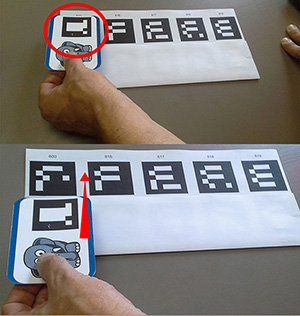
I am developing a new project where I use a image with five fixed positions represented by five AR markers.
I Need identify when another marker AR overlap a those headings and in what position (1-2-3-4 or 5).
You indicate me some PlugIT use approach to this project?
#29 Re: Educational Projects » OpenSpace3D project for early childhood education » 2-Sep-2015 20:13:22
Very good, I am very grateful. I will dedicate myself to this forum thread becomes much discussed and useful.
#30 Educational Projects » OpenSpace3D project for early childhood education » 2-Sep-2015 18:57:18
- Alexandre_Brazil
- Replies: 2
This project for early childhood education was developed entirely in OpenSpace3D and serves for children to learn the alphabet and begin to form the first syllables and words.
If they want to receive the complete project to adapt to your language, just send an email to alexandre@faciltecnologias.com.br.
#31 Re: Openspace3D » Leap Motion for Android » 22-Aug-2015 00:09:59
Got it. The smatphones does not have sufficient processing for background extraction operations and other operations required for detecting a hand. We have to wait for the evolution of processing power such equipment.
Thanks
#32 Openspace3D » Leap Motion for Android » 21-Aug-2015 13:28:58
- Alexandre_Brazil
- Replies: 3
Hello Arkeon,
A very interesting resource for the development of educational aplicarivos is the ability to interact with the virtual world with your hands, but Leap Motion hardware only works on the desktop environment (Windows / Linux / Mac).
I wonder about the feasibility of implementing the recognition of hands using computer vision, so that the resource can be exported to Android. There are some jobs available on the internet as referênca: https://ilab.cs.ucsb.edu/projects/taehe … ndyAR.html
The recognition feature of the hands need not have recognition of hand pieces, such as the phalanges of the fingers, simply a more general recognition, allowing just touch the virtual objects using the physical hands.
Thanks,
Alexandre - Brazil
#33 Re: Openspace3D » OpenSpace3D 1.9 » 20-Aug-2015 21:41:36
Hello, sorry for being slow to answer.
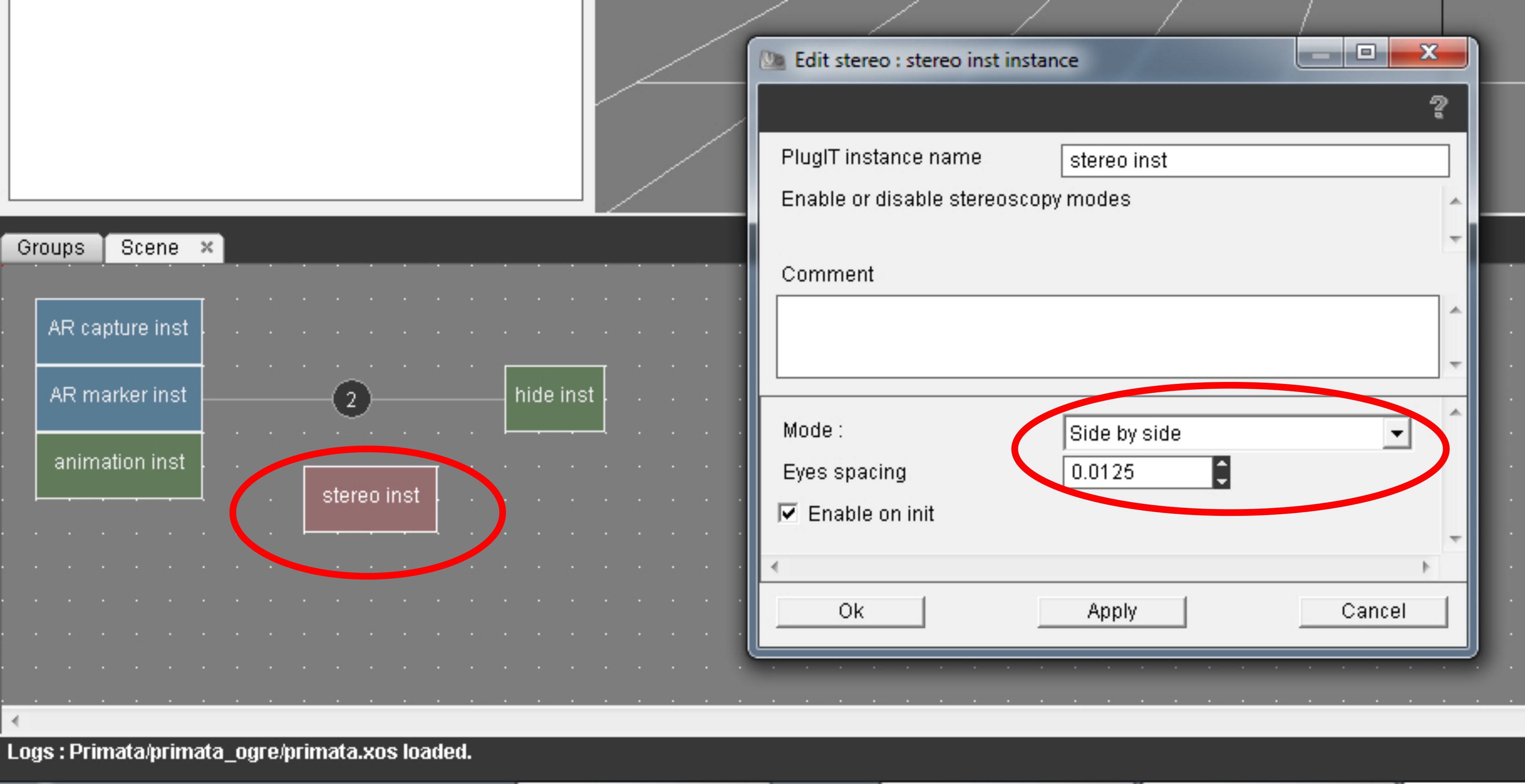
In OpenSpace3D you simply insert the PlugIt Stereo (the rendering) and choose the side by side option.
I hope this helps.
#34 Openspace3D » School in Brazil teach OpenSpace3D » 17-Aug-2015 13:42:38
- Alexandre_Brazil
- Replies: 1
Hello guys,
I am very happy to disclose the OpenSpace3D in Brazil. One of the best known schools in the games development area and multimedia asked me to build a course in video format to teach OpenSpace3D.
I believe we must expand efforts to disseminate and teach OpeSpace3D as it is one of the best options in the market.
Hello guys,
#35 Re: Openspace3D » OpenSpace3D 1.9 » 17-Aug-2015 01:47:54
Hello guys,
I share the video that recorded demonstrating the great results I got with the export to Android.
Link video
#36 Re: Openspace3D » OpenSpace3D 1.9 » 8-Aug-2015 01:31:22
Very good, I'm impressed with the result. Did some testing and everything worked perfectly. Once again I congratulate all of I-Maginer team.
#37 Re: Scol » First step to Scol on Android » 8-Jul-2015 01:03:44
Hello Arkeon,
I will print a version of glasses with the OpenSpace3D name on the cover. It should take a few weeks, because the lens is imported from the USA. Once you have done I will send by the postal service.
I need to know the dimensions of smartphone you use the glasses?
Sincerely
#38 Re: Scol » First step to Scol on Android » 4-Jul-2015 15:39:41
Hello Arkeon,
Used magnifying lenses. They were purchased on ebay(http://www.ebay.com/itm/5x-pocket-loupe-magnifier-with-Aspheric-Lens-/251148139033?hash=item3a79987a19).
The smartphone I use this project has the following dimensions: 145 x 73 x 9 mm, but the cradle in which the equipment is fitted can be changed in the 3D print file, if necessary (it is a separate piece). If you want, I can change the design for dimenões of your phone, change the name on the cover Educaterc by OpenSppace3D or Imaginer, print a unit and send it to you by posting our system here in Brazil. Our 3D printer also has a quality resolution, but the end result is acceptable in case of a prototype. See the picture of the final result of printing:
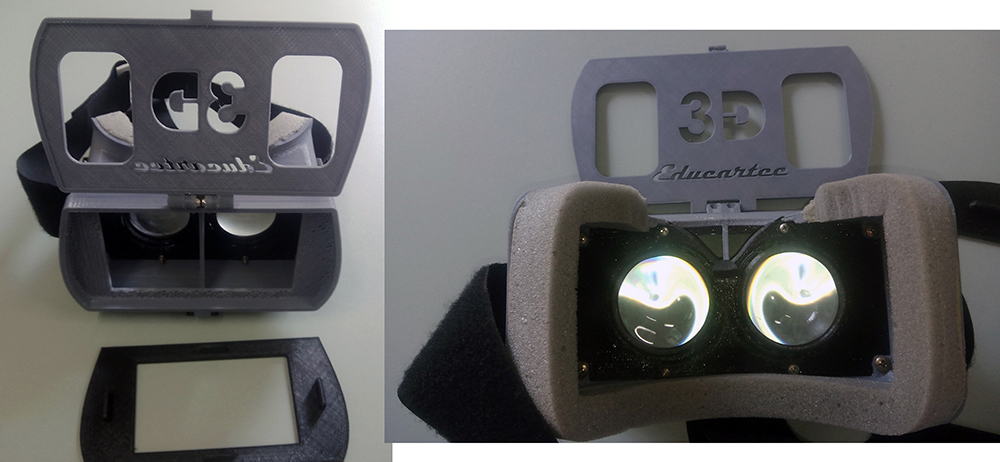
About the use of glasses with the augmented reality feature the idea is to enter the PlugIT Capture AR and Marker AR , along with the current project carboard. Important to note that this case will not be a closed 3D environment, such as a room, but only a 3D object to be positioned on an AR marker.
Thanks
#39 Re: Scol » First step to Scol on Android » 3-Jul-2015 13:59:57
Hello Arkeon,
Installed the apk and the vision spectacles in carboard worked perfect. I did not understand the network resource? What should be available in case the network is activated?
I want to contribute to this work by offering the participants of this forum a project of AR and VR glasses.
Below is a link to download the 3D design file glasses that can be printed. This goggles has a far superior result to the carboard because its higher quality lenses.
Watch the video of the project
We know that there are already several glasses in electronic comérrcio sites, but all are designed for RV and not for RA. I believe that a breakthrough would be to use the glasses for RA.
Thank you for the quality of their work and the immediate return of all our posts in this forum.
#40 Re: Scol » First step to Scol on Android » 1-Jul-2015 21:19:38
Hello Arkeon,
I thank for his return. I will be careful in new upgrade and so they leave this will work from a smartphone using design to create an RA and RV glasses.
#41 Re: Scol » First step to Scol on Android » 1-Jul-2015 21:03:58
I'm having trouble running this project on Android. Use only PlugIt AR Capture , AR Marker and Animation. The smartphone cam is triggered, but the 3D object is not displayed on the marker.
Follow the link to download the project
Link Download
And other questions concerning the use of PlugIT Stereo with side-by-side option to simulate the split screen on the smartphone. I wonder if this PlugIT can now be used stably in the Android environment?
Once again I thank her precious help.
#42 Re: Scol » First step to Scol on Android » 30-Jun-2015 21:07:23
Hello Arkeon,
I wonder if you can render two windows (like what occurs in the Oculus Rift) on Android. Thus we sweat a smartphone in AR and VR glasses (such as https://www.google.com/get/cardboard/ or http://www.ebay.com/itm/Virtual-Reality … 1c8b7e954)
I appreciate any help.
#43 Re: Openspace3D » motion detection » 26-Jun-2015 18:38:19
Hello,
I would suggest another option that may be more efficient in case of children with cerebral palsy, ie, the use of PlugIT Tobii EyeX and its sensor (http://www.tobii.com/en/eye-experience/ eyex /). This option will allow reading the iris of the eye movement of the child, which will allow the development of more interactive applications for children with cerebral palsy.
If this option is not possible due to the need to invest in purchasing a Tobii sensor (on average 99 Euros), I believe that the best option is the use of AR markers stuck in the child's head (wearing a cap, a track, etc.) . A good example is what comes with OpenSpace3D in C: \ Users \ ... \ Documents \ OpenSpace3D \ examples \ basics \ head_tracking_with_marker

#44 Re: Scol » First step to Scol on Android » 18-Jun-2015 00:21:25
very good 
#45 Openspace3D » Hands modeling for use with Leap Motion » 16-Jun-2015 01:44:28
- Alexandre_Brazil
- Replies: 1
Hello everybody,
I want to model the left and right hand to use with the Leap Motion PlugIT. I need rigged the bones of this 3D model?
What is the basic rule to build a hand that works all joints within OpenSpace3D?
Thank you very much any help.
#46 Re: Scol » First step to Scol on Android » 9-Jun-2015 00:49:46
#47 Re: Scol » First step to Scol on Android » 7-Jun-2015 21:10:11
Hello Arkeon,
I tested AR capture and AR Marker and it worked perfectly. I am very excited about the possibilities.
#48 Re: Scol » First step to Scol on Android » 7-Jun-2015 15:27:40
Hello Arkeon,
I tested the new version of APK. Operation is actually more stable.
The test was done on an Android 4.4 Kikat.
I am eagerly awaiting the version that natively accesses the cam so we can create AIR applications for Android.
I once again congratulate you on this important work to create an Android version OpenSpace3D. I'm sure it will be very aprecidao throughout the user community.
#49 Re: Scol » First step to Scol on Android » 6-Jun-2015 00:39:14
Hello Arkeon,
I congratulate you for the outcome. I know there is still a long walk to implement all (or almost all) of the features of OpenSpace3D for Android.
I tested the APK on an Android 4.4 Kikat. It worked perfectly.
I did test also creating a simple design and copying the partition folder, working very well.
#50 Re: Openspace3D » Hello Arkeon, OpenSpace3D works on linux? » 28-May-2015 21:43:44
I am at your disposal to help test and debug the test versions you compile.